

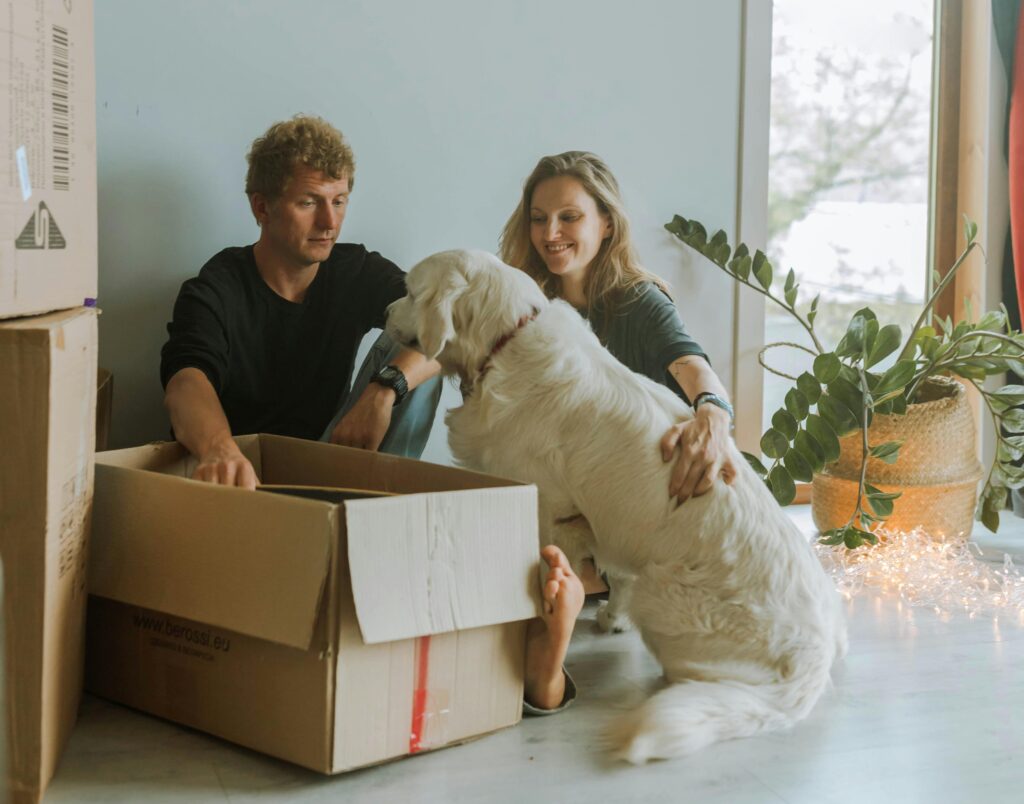
Moving with pets takes a bit more planning than a typical move, but with the right preparation, it can be a smooth and safe experience for both you and your pet. Animals are sensitive to change, so keeping things calm, structured, and familiar can make a big difference on moving day.
Plan Ahead
Preparation is key when moving with pets. Before the move, whether local or long distance, make sure your pet is healthy and up to date on vaccinations. If you are relocating long distance or across state lines, your veterinarian may also need to provide a health certificate.
It is also important to research your new home and neighborhood ahead of time. Look for pet-friendly spaces, nearby parks, and local veterinary clinics so you are prepared once you arrive.
Keep Your Pet Safe
Moving day can be busy and stressful, with doors open, boxes everywhere, and people coming in and out. To keep your pet safe, it is often best to place them in a quiet, secure room or have a trusted friend or family member watch them during the move.
This helps prevent:
- Escaping through open doors
- Getting stressed by noise and activity
- Accidents or injuries during loading and unloading
Use a Secure Travel Setup
Whether you are traveling by car or another method, your pet should always be safely secured.
For car travel:
- Use a crate, carrier, or pet seatbelt
- Keep them comfortable with familiar blankets or toys
- Take breaks for water and bathroom needs on longer trips
Never allow pets to roam freely in a moving vehicle, as this can be dangerous for both you and them.
Pack a Pet Essentials Kit
Just like you pack your own essentials, your pet should have a dedicated moving kit. Include:
- Food and water for the trip
- Bowls or travel containers
- Leash, harness, and collar with ID tags
- Waste bags or litter supplies
- Medications if needed
- A comfort item such as a blanket or toy
Familiar scents and objects can help reduce stress during the transition.
Help Reduce Stress and Anxiety
Moving can be overwhelming for pets, especially in new or unfamiliar environments. Try to maintain their normal routine as much as possible, including feeding times and walks.
If your pet experiences anxiety, consult your veterinarian before moving for guidance on calming strategies or safe solutions. Avoid introducing too many changes at once if possible.
Make Safety and Identification a Priority
Before the move, double check that your pet’s ID tags are updated with your new contact information. Microchipping is also highly recommended in case your pet becomes lost during the transition.
Keeping your pet secure and identifiable adds an extra layer of protection during a busy moving process.
Help Your Pet Adjust After the Move
Once you arrive at your new home, give your pet time to adjust. Set up a quiet space with their bed, toys, and familiar items so they feel safe.
Let them explore slowly and gradually get used to their new environment. Sticking to a consistent routine will help them settle in more comfortably.
Remember, moving with pets requires extra care, but it can be a smooth experience with the right planning. By focusing on safety, comfort, and routine, you can help your pet transition into their new home with less stress and more confidence.
A well-prepared move makes all the difference for both you and your furry friends.